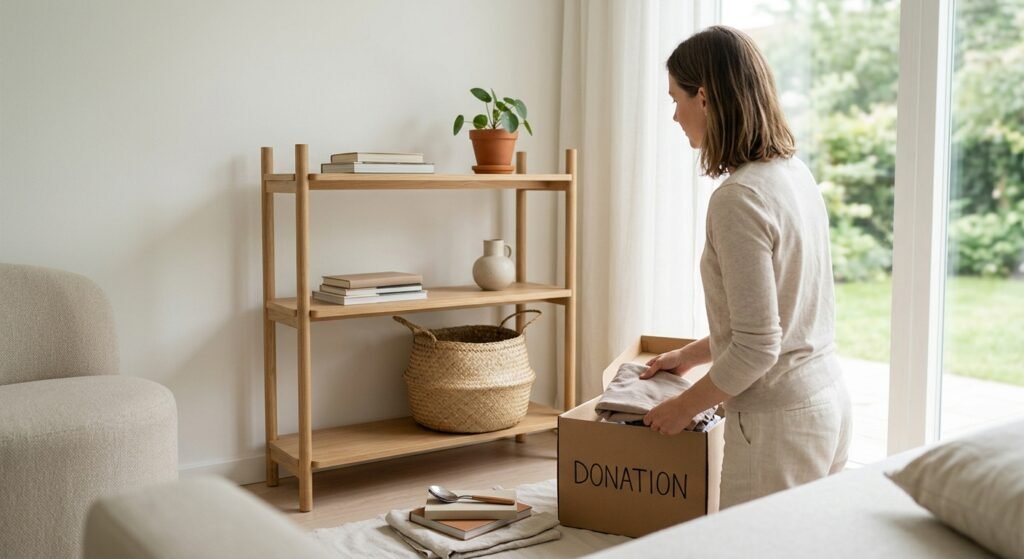
If you’ve ever found yourself wandering the aisles of a home goods store, mesmerized by clear plastic bins, woven baskets, and velvet hangers, you are not alone. There is something deeply soothing about the promise of a fresh container. We tell ourselves that if we just buy the right divider, the right stackable crate, or the right closet system, our homes will finally feel peaceful, tidy, and effortlessly managed.
So we bring the containers home. We spend an afternoon neatly folding, categorizing, and arranging. Yet, three weeks later, the bins are overflowing, the drawers won’t close, and the underlying sense of heavy, visual chaos is right back where it started.
Here is the quiet truth most home organization trends won’t tell you: you do not have a storage problem. You have an excess belongings problem.
When your living space feels crowded, adding more bins doesn’t create order—it simply creates organized clutter. True peace at home doesn’t come from finding better places to hide your things; it comes from having fewer things to manage.
Why Buying More Storage Can Actually Make Clutter Worse
It sounds counterintuitive. How could buying storage solutions make your home more cluttered?
When we rely on containers to solve our space issues before addressing what we actually own, we inadvertently trap ourselves in a cycle of accumulation.
- Storage acts as a visual band-aid. Bins and boxes conceal the sheer volume of items we own. They allow us to postpone the decision-making process. Putting extra kitchen tools into an opaque basket feels like solving the problem, but all you’ve really done is given unnecessary items a permanent residence.
- Containers take up physical square footage. Storage products are physical objects that consume space. Adding large plastic totes, extra shelving units, or bulky furniture into an already crowded room leaves less room for you to breathe, walk, and live.
- Organizing clutter drains your energy. It takes real time and emotional energy to wash, dust, sort, label, and rearrange things you don’t even use. When you own less, your daily home maintenance drops dramatically without needing complex systems.
+-----------------------------------------------------------------------+
|                       THE STORAGE TRAP CYCLE                          |
|                                                                       |
|  Feel Overwhelmed --> Buy New Containers --> Fill Bins with Everything|
|         ^                                                   |         |
|         |                                                   v         |
|  Clutter Returns <-- Space Runs Out <-- Postpone Decisions on Stuff   |
+-----------------------------------------------------------------------+
When you shift your mindset from “Where can I hide this?” to “Do I actually need to keep this?”, your home transforms from a storage unit for unused items into a functional sanctuary.
The “Declutter First” Rule: A Simple 4-Step Process
Before you spend a single dollar on organizational bins, commit to a clear sequence of events: Declutter first, assess what remains, organize what you actually use, and buy storage only when strictly necessary.
Follow this straightforward step-by-step method whenever you tackle a space in your home.
Step 1: Clear the Surface Completely
Pick one manageable area—a single drawer, a shelf, or a bathroom counter. Empty it out completely. Seeing the bare space gives you a clear baseline of the physical volume you actually have available.
Step 2: Sort into Three Immediate Categories
Without overthinking, group your items into three distinct piles:
- Keep: Items you use regularly, genuinely love, or truly need.
- Relocate: Things that belong in another room or space.
- Let Go: Items to donate, recycle, or throw away.
Step 3: Edit Your “Keep” Pile (The Critical Filter)
Look closely at your keep pile. Are there duplicate items? Things you kept “just in case”? Items tied to guilt or past hobbies? Be honest about your current lifestyle, not the lifestyle you had five years ago or hope to have five years from now.
Step 4: Measure and Assess Before Purchasing
Only when your “Keep” pile contains strictly items you use and love should you evaluate your storage needs. Measure the physical dimensions of your space first. Often, you will find that once the excess is gone, your existing drawers and built-in cabinets are more than enough.
What to Get Rid of Before You Buy Storage
If you feel stuck on what to let go of, start with low-hanging fruit. Removing these obvious items instantly reduces physical volume and creates momentum without emotional strain.
- Expired and unused health and beauty products: Half-empty lotion bottles, expired sunscreen, dried-out mascara, and samples you’ll never use.
- Duplicate kitchen utensils: You rarely need three potato peelers, four spatial sets, or three duplicate measuring cup sets.
- Strained, stained, or unmatched linens: Frayed towels, single pillowcases without matching sheets, and old washcloths.
- Instruction manuals and extra cables: Almost every user manual is accessible online as a PDF, and unidentifiable cords rarely find a home.
- Promotional freebies and swag: Branded plastic water bottles, tote bags, cheap pens, and giveaway knick-knacks.
- Finished magazines and books you won’t re-read: Keep only the literature that deeply inspires you or that you actively reference.
Practical Room-by-Room Guide to Simplifying Your Home
To create a calmer, more intentional home, focus on how each room functions day-to-day. Here is how to apply a minimalist approach across key areas of your house.
+--------------------------------------------------------------------------+
|                       ROOM-BY-ROOM DECLUTTERING GUIDE                    |
+--------------+----------------------------------+------------------------+
| Room         | Common Clutter Hotspots          | Immediate Action       |
+--------------+----------------------------------+------------------------+
| Kitchen      | Gadgets, plastic containers, cups| Purge unmatched lids   |
| Bedroom      | Clothing, nightstand clutter     | Edit off-season clothes|
| Bathroom     | Duplicate toilet products, towels| Clear daily counters   |
| Living Room  | Toys, throw pillows, paperwork   | Limit sofa textiles    |
+--------------+----------------------------------+------------------------+
The Kitchen: Streamlining the Heart of the Home
The kitchen is often ground zero for home organization issues. Instead of buying complex spice racks or deep pantry bins, try these adjustments:
- Plastic Containers: Match every lid to its base right now. Recycle any unmatched bottoms or warped lids. Cap your total set to what actually fits comfortably in one dedicated drawer or shelf.
- Countertops: Keep countertops as clear as possible. Leave out only appliances you use daily (such as a coffee maker or toaster). Visual clutter on flat surfaces creates instant visual anxiety.
The Bedroom: Creating a Restful Sanctuary
Your bedroom should be a place of rest, not a reminder of unwashed laundry and unorganized drawers.
- Nightstands: Limit nightstand surfaces to three items: a lamp, a book, and a glass of water. Clear the top drawer of loose receipts, old lip balms, and spare batteries.
- Closet: Instead of buying extra hanging organizers or velvet hanger multi-packs, review your wardrobe. Remove anything that doesn’t fit, feels uncomfortable, or causes guilt.
The Bathroom: Simplifying Daily Routines
Bathroom drawers easily turn into graveyards for half-used cosmetics and hair care items.
- Under-Sink Vanity: Consolidate backup toiletries (toothpaste, soap, shampoo) into one small container. Stop purchasing back-up bottles until your current stash is completely finished.
- Medicine Cabinet: Dispose of expired prescription medications safely at a pharmacy, and streamline your skincare routine to the core products you use daily.
The Living Room: Restoring Visual Calm
Living rooms tend to collect “everyday clutter” from every family member.
- Media Consoles: Purge old DVDs, broken gaming accessories, and forgotten cords.
- Textiles: Be selective with throw pillows and blankets. If you have to move five pillows off the couch just to sit down, you have excess textiles, not a storage shortage.
When to Buy Storage (And How to Choose Wisely)
Storage products aren’t inherently bad; they are simply meant to be the final step, not the first.
Once you have thoroughly decluttered a space, carefully evaluated your remaining items, and found that you still need a structure to keep things orderly, shop intentionally.
Look for Multipurpose, Timeless Pieces
Choose solutions made of natural materials—like wooden trays, woven seagrass baskets, or sturdy linen boxes—that blend seamlessly into your home’s decor. Avoid bright, cheap plastic bins that contribute to visual clutter even when closed.
1-2 Recommended Practical Storage Categories
If your remaining items require subtle containment to stay organized, consider focusing on these two categories:
- Clear Drawer Organizers: Ideal for holding smaller, essential items in kitchen cutlery drawers, bathroom vanities, or desk drawers. They prevent items from sliding without concealing contents.
- Simple Fabric or Woven Storage Baskets: Perfect for grouping items inside open shelving, linen closets, or entryways to hold small winter accessories or clean hand towels.
How to Stop Buying Unnecessary Storage Going Forward
Breaking the habit of relying on storage purchases requires a subtle mental shift. Next time you feel inspired to buy a neat organizational tray or large tote bin, ask yourself these three simple questions:
- “What am I putting inside this container?” If the answer is vague, walk away.
- “Am I organizing this item, or am I just hiding it?” Be honest about whether the contents add value to your day.
- “Can I reduce what I own so that it fits in my existing cabinets?” Challenge yourself to make space through subtraction rather than addition.
Take One Action Today
Transforming your home doesn’t require a weekend-long home overhaul or an expensive trip to the container store. In fact, it starts by doing the exact opposite.
Your action step for today: Pick one tiny surface—a single bathroom drawer, your top nightstand drawer, or one kitchen shelf. Empty it out completely, discard what you don’t use, put back only what serves you, and leave the leftover space empty. Notice how much lighter that small space feels—no extra bins required.