

Finding time for exercises for desk workers can be challenging, especially when you spend most of your day sitting at a computer.
Spending most of your working day sitting at a desk can make it difficult to maintain an active lifestyle. Between meetings, emails, deadlines and everyday responsibilities, exercise can easily become something you keep postponing.
If you are over 40, you may also be thinking more about maintaining muscle strength, mobility and physical wellbeing as you get older.
The good news is that becoming more active does not necessarily mean spending hours at the gym. Small changes throughout your working day, combined with a realistic home workout routine, can help you build healthier habits.
In this guide, you will discover practical ways to move more when you work at a desk, simple exercises to consider and how to create a home fitness routine that fits your lifestyle.
Why Is Sitting for Long Periods a Concern?
Many office-based jobs involve spending several hours sitting in front of a computer. Although working at a desk is a normal part of modern life, spending too much time inactive is not ideal for overall health.
According to Ireland’s national physical activity guidelines, adults should reduce sedentary time and replace it with physical activity whenever possible.
Regular movement is important even if you exercise outside working hours. A workout in the evening does not mean you need to remain seated for the rest of the day.
The goal is not to avoid sitting completely. It is to create more opportunities to move.
7 Practical Ways to Stay Active During a Desk Job
You do not need a complicated fitness plan to make your working day more active. Start with manageable changes.
1. Take Short Movement Breaks
One of the simplest ways to interrupt long periods of sitting is to stand up and move regularly.
You could:
- Walk around your home or office.
- Refill your water bottle.
- Stand while taking a phone call.
- Walk during part of your lunch break.
- Stretch gently between tasks.
Try setting a reminder if you often lose track of time while working.
There is no single movement-break schedule that suits everyone. The important thing is to avoid remaining in the same position for unnecessarily long periods.
2. Walk During Your Lunch Break
A short walk can be an easy way to add movement to your day.
If possible, leave your desk during lunch and walk outdoors or around your workplace.
Walking is accessible, requires little equipment and can be adapted to different fitness levels.
If you are just getting started, even a short walk can be a useful first step.
3. Try Gentle Desk Exercises
Some gentle movements can be performed during a break without changing into workout clothes.
Examples include:
- Shoulder rolls.
- Gentle seated torso movements.
- Ankle circles.
- Standing calf raises.
- Gentle neck movements within a comfortable range.
These movements are not a substitute for a complete strength programme, but they can help you change position and add movement to your day.
Avoid movements that cause pain or discomfort.
4. Use the Stairs When Appropriate
Taking the stairs instead of the lift can be another opportunity to move.
Start at a comfortable pace and use the handrail if needed.
If stairs are difficult because of joint problems, balance concerns or another physical limitation, choose an alternative activity that feels safe.
5. Stand During Some Activities
You may be able to stand during certain phone calls, reading tasks or short breaks between meetings.
If you use an adjustable desk, alternating between sitting and standing may also help you vary your working position.
Standing all day is not the goal. Changing position and moving regularly are more practical priorities.
6. Add Strength Exercises to Your Week
Walking and movement breaks are useful, but they do not replace muscle-strengthening activities.
Resistance exercises help develop and maintain muscle strength and support everyday physical function.
You can exercise at home using:
- Body-weight movements.
- Resistance bands.
- Dumbbells.
- Suitable home workout programmes.
Adults are generally advised to include muscle-strengthening activities involving the major muscle groups on at least two days per week.
7. Create an Exercise Habit Outside Working Hours
Choose an activity that fits your schedule and interests.
For example, you could:
- Walk before or after work.
- Follow a beginner-friendly home workout.
- Practise gentle mobility exercises.
- Attend a suitable fitness class.
- Include two weekly strength sessions.
You do not need to do everything at once. Start with a realistic plan and build gradually.
5 Beginner-Friendly Exercises for People Who Work Sitting Down
If you spend most of the day at a desk, a simple home routine can help you work on different muscle groups.
Here are five movements you may consider, depending on your fitness and physical ability.
1. Sit-to-Stand

Sit on a stable chair and stand up slowly, then return to sitting with control.
This movement works the muscles of the legs and hips.
2. Wall Push-Ups

Stand facing a wall, place your hands against it and gently bend your elbows before pushing back.
This is a modified pushing exercise that works the upper body.
3. Standing Calf Raises

Stand near a stable support, lift your heels from the floor and lower them slowly.
This exercise works the calf muscles.
4. Glute Bridges

Lie on your back with your knees bent and feet on the floor. Lift your hips gently, then lower them with control.
This movement works the muscles around the hips and glutes.
5. Resistance Band Rows
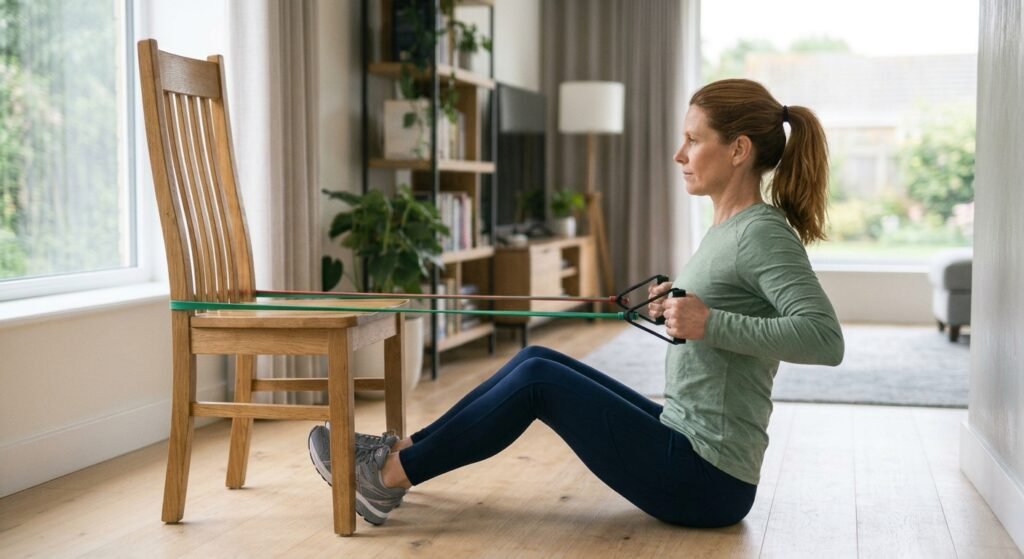
Hold a suitable resistance band and pull it towards your body while maintaining a controlled posture.
This exercise works muscles in the upper back and arms.
Start with movements you can perform comfortably. If you have a medical condition, ongoing pain, balance difficulties or a history of injury, seek appropriate professional advice before starting a new exercise routine.
How to Build a Home Workout Routine When You Work at a Desk
Finding time to exercise can be challenging when you have a full working schedule.
A simple weekly structure can make the process easier.
Here is an example of how you might organise your activity:
Monday: Short home strength session.
Tuesday: Walking and movement breaks.
Wednesday: Gentle mobility or another enjoyable activity.
Thursday: Home strength session.
Friday: Walking during or after work.
Saturday: An activity you enjoy, such as cycling, swimming or dancing.
Sunday: Rest or gentle movement.
This is only an example. Your routine should reflect your fitness level, health, schedule and recovery needs.
For more guidance on building muscle strength after 40, read our guide:https://littleconfortfinds.com/strength-training-after-40/
What Equipment Can Help You Exercise at Home?
You do not need a home gym to become more active.
However, a few practical items may make home exercise more convenient.
Resistance Bands
Resistance bands are lightweight and can be used for different upper-body and lower-body exercises.
When comparing options, consider resistance levels, material, grip comfort and safety instructions.




Dumbbells
Dumbbells provide additional resistance for exercises such as rows, curls and other strength movements.
Choose weights that you can control safely and comfortably.



Exercise Mats
An exercise mat can make floor-based movements more comfortable.
Look at the thickness, grip, dimensions and material before purchasing.


Are Home Workout Programmes Useful for Desk Workers?
Some people prefer to follow a structured programme rather than planning their own exercises.
A digital home workout programme may provide a more organised approach, particularly if you have limited time or prefer exercising at home.
Before choosing a programme, consider:
- Is it suitable for beginners?
- Does it explain the exercises clearly?
- Can you follow it around your working schedule?
- Are modifications available for different fitness levels?
- Does the programme explain its costs and purchase conditions?
- Are the instructor’s qualifications and programme contents clearly presented?
A programme should offer realistic guidance, not promise instant results.
A Home Workout Option to Explore
If you spend much of your working day sitting and prefer exercising at home, you may want to explore Strength at Home for Desk Workers 40+.
Before deciding whether it is right for you, review the programme description, the exercises included, the level of difficulty and the purchase conditions.
The best option is one that matches your experience, goals, available time and physical needs.
How to Stay Consistent When You Have a Busy Schedule
Starting a routine is one thing. Maintaining it is another.
These practical ideas may help:
Set realistic goals. Begin with activities that fit into your current schedule.
Prepare your exercise space. Keep your mat, resistance bands or other equipment somewhere accessible.
Choose activities you enjoy. You are more likely to continue doing something that feels manageable and rewarding.
Track your progress. Keep a simple record of your sessions, walking or other activities.
Avoid all-or-nothing thinking. Missing one workout does not mean you have failed. Return to your routine when you can.
Consistency develops over time, not overnight.
Frequently Asked Questions
How can I stay active if I work at a desk all day?
Take regular movement breaks, walk during lunch, change your working position and include suitable strength exercises in your weekly routine.
What are the best exercises for people who sit all day?
Walking, sit-to-stand exercises, wall push-ups, calf raises and suitable resistance exercises can all be useful options, depending on individual ability.
How often should desk workers exercise?
General adult guidelines recommend at least 150 minutes of moderate-intensity physical activity per week and muscle-strengthening activities on at least two days per week. Start at a level appropriate for your fitness and health.
Can I build strength at home without going to the gym?
Yes. Body-weight exercises, resistance bands and dumbbells can all be used for home strength training.
Is a home workout programme worth trying after 40?
It may be useful if you prefer structured guidance and need a routine that fits around work. Check the programme contents, suitability, instructor information and purchase terms before deciding.
Final Thoughts
Working at a desk does not mean you have to accept an inactive lifestyle.
Small movement breaks, short walks and a realistic home workout routine can help you create more opportunities to stay active throughout the week.
You do not need to make dramatic changes. Begin with manageable steps, build your confidence and gradually develop habits that support your long-term wellbeing.
Your working day may involve many hours at a desk, but your whole lifestyle does not have to revolve around sitting.
Affiliate Disclosure: This article may contain affiliate links to products or programmes available through ClickBank. If you make a purchase through one of these links, Little Comfort Finds may earn a commission at no additional cost to you. Recommendations are provided for informational purposes. Always review the product details and purchase conditions before buying.